The Brevard County Court manages local cases, hearings, and public records that support the county court system. This section explains how the court works and what residents can expect from its core services. It gives clear, practical details for anyone searching for legal info, Brevard, daily case activity, or courthouse functions. The court ensures that residents have a structured system to follow, making it easier to track cases and manage legal matters efficiently.
The court plays a steady role in serving the community through organized procedures, recorded filings, and structured Brevard County judicial services. Each Brevard County courthouse handles a wide range of matters, and residents depend on these locations to keep legal steps simple and predictable. These judicial services also provide essential support for attorneys, businesses, and individuals who interact with the legal system. By offering a reliable starting point, this section helps users understand how the court operates and what they may find in its public record entries.
What is the Brevard County Court System
Brevard County Court is a local judicial body within Florida’s 18th Judicial Circuit, handling cases that arise within Brevard County. It serves as a starting point for most civil, criminal, and traffic matters, offering accessible legal resolution for residents.
The 18th Judicial Circuit of Florida includes Brevard County and operates as part of the state’s unified court system. It consists of both county courts and circuit courts, which handle different types of cases. County courts generally hear less complex matters, such as misdemeanors, small claims, traffic violations, and ordinance violations. In contrast, circuit courts manage more serious civil and criminal cases, including felony offenses, family law disputes, probate issues, and appeals from county courts. This division ensures that cases are heard in the most appropriate setting based on their severity and legal requirements.
Court Divisions in Brevard County
Brevard County’s trial courts are organized into several divisions, each specializing in specific types of cases. Understanding these divisions helps residents identify the correct court for their legal matters:
- Criminal Division (Misdemeanors): Handles minor offenses, including first-time misdemeanors, petty theft, and low-level criminal infractions.
- Civil Division (Small Claims): Resolves disputes involving monetary claims typically under $8,000. Parties can represent themselves or hire attorneys.
- Traffic Division: Deals with moving violations, parking disputes, and traffic citations. Many matters are resolved through fines, hearings, or defensive arguments.
- Probate Division: Oversees wills, estates, guardianships, and the administration of deceased persons’ assets.
- Family/Juvenile Division: Focuses on domestic relations, child custody, support matters, and juvenile delinquency cases.
- Other Specialized Courts: Certain cases may fall under specific judicial programs like drug courts or mental health courts, which provide structured solutions and rehabilitation options.
This structure allows Brevard County courts to manage a wide range of legal matters efficiently while ensuring that each case receives the attention it requires. The judicial process is transparent, with procedures and case tracking accessible through official sources such as flcourts18.org. By dividing responsibilities among specialized divisions, Brevard County ensures that residents experience a fair and timely resolution for their legal concerns. Understanding these distinctions can save time and clarify which court to approach for specific issues, from traffic tickets to family law cases.
How to Search Court Records
Brevard County court records can be checked online through the Clerk of Court’s official website, brevardcountycourt.org. For records not available online, the Clerk’s office provides a clear process to request documents directly.
Accessing Court Records Online
The Brevard County Clerk of Court offers a range of public court records that can be searched through its website. These include criminal cases, civil disputes, family law matters like marriage and divorce, and property records. Visitors can use the online search tool to find details about case filings, court hearing dates, judgments, and related legal documents.
Key features of the online system:
- Search by case number or party name: Quickly locate cases using names of individuals or businesses involved.
- View case summaries: Includes filing dates, case status, and court rulings.
- Downloadable documents: Some court documents, such as judgments or motion,s are available in PDF format.
The online portal primarily covers recent cases and commonly requested records. Older or more sensitive documents may require a formal request to the Clerk’s office.
Types of Records Available Online
The Clerk’s website allows access to several categories of public court records:
- Criminal records: Arrest reports, charges, court dates, and sentencing outcomes.
- Civil records: Disputes, contracts, and property-related lawsuits.
- Family records: Marriage licenses, divorce filings, and domestic relations cases.
- Property records: Deeds, liens, and property ownership histories.
These resources are part of the county judiciary’s commitment to transparency and public information. Users can quickly confirm case details without needing to visit the courthouse in person.
Requesting Non-Online Records
Certain legal documents or older cases may not be digitized. For these, Brevard County provides an open records request process:
- Submit a written request: Include the case number, names of involved parties, and the type of document needed.
- Delivery options: Requests can be mailed, emailed, or submitted in person at the Clerk’s office.
- Fees and processing time: Some requests may incur minimal copying or administrative fees, and processing can take several business days depending on the record type.
The Clerk’s staff ensures that the request process follows Florida public records law, providing both residents and professionals access to important legal documents.
Court Services and Judicial Functions
Brevard County Court provides a wide range of services to help residents manage legal matters efficiently. These include filing cases, paying fines, accessing self-help resources, and participating in jury duty.
Court Services
Brevard County judicial services cover both civil and criminal matters. Residents can file cases for small claims, family law, probate, and traffic violations. The court also offers online payment options for fines and fees, allowing convenient processing without visiting the courthouse. For those needing forms, instructions, or general guidance, self-help centers provide step-by-step assistance. Some of the key services include:
- Filing civil, criminal, and family cases
- Requesting court records
- Paying traffic tickets and court fines
- Scheduling hearings and case management
- Jury duty registration and information
These services aim to provide public access to the judicial process while maintaining clarity and transparency. The court website, along with in-person clerks, assists residents in completing filings accurately.
Court Security
Ensuring a safe environment is a priority at Brevard County Court. The Brevard County Sheriff’s Office oversees courtroom security, including screening visitors, monitoring courtrooms, and responding to emergencies. Officers are present during all proceedings to protect staff, jurors, and the public.
Key security measures include:
- Metal detectors and bag screenings at entrances
- Courtroom deputies for each session
- Coordination with local law enforcement for high-risk cases
Security procedures help maintain order during hearings and trials, allowing the judicial process to proceed smoothly.
Self-help and Pro Se Representation
Many residents choose to represent themselves in court, known as Pro Se representation. Brevard County provides resources to support these self-represented litigants. The Florida Courts Help offers forms, instructions, and legal information relevant to civil, family, and traffic cases.
For those seeking low-cost or free legal assistance, options include:
- Florida Bar Foundation programs
- Legal Aid Services of Brevard County
- Online court forms available at brevardclerk.us
These resources empower residents to handle legal matters effectively while understanding the judicial process. Self-represented individuals can also access informational workshops and consultation sessions offered by court staff to clarify procedures. By combining accessible court services, structured security, and guidance for self-represented litigants, Brevard County ensures residents can participate confidently in the legal system. Whether filing a case, paying fines, serving on a jury, or seeking legal information, the court provides clear, supportive resources to assist every step of the way.
How Brevard County Court Dockets Work
A court docket in Brevard County is a schedule listing the cases set for hearings or trials. It includes essential details such as case numbers, parties involved, hearing types, and scheduled dates. Brevard County court dockets provide a clear snapshot of upcoming hearings and case activities. Each entry typically shows the case number, names of the parties, type of hearing (such as motion, trial, or pre-trial conference), and the date and time of the session. Some dockets may also note the presiding judge and the courtroom location, helping users follow the flow of court proceedings efficiently.
Searching a Brevard County Court Docket
Users can search a Brevard County court docket through the official Brevard County Court website. The search usually requires basic information such as the case number, party names, or filing date. Once a search is completed, users will see a docket summary that lists all scheduled hearings, recent filings, and updates to the case.
Key points about viewing a docket:
- Docket summaries are provided for each case, showing court activities in chronological order.
- Full case documents are not always included; in most instances, only brief descriptions of filings and hearings are available.
- The court calendar can be filtered by date, case type, or division, making it easier to track multiple cases.
This system allows the public, attorneys, and litigants to monitor case progress efficiently. For example, a docket entry might read: “Case 05-2023-CV-01234, Smith v. Johnson, Motion Hearing, 10:00 AM, Courtroom 3”. From this, users can identify the parties, type of hearing, and the schedule.
Interpreting the Docket
A docket summary helps users see what has happened in a case and what is coming next. Common terms include:
- Hearing Schedule: Lists upcoming hearings and trials.
- Trial Dates: Indicates the formal court sessions where evidence and testimony will be presented.
- Case Tracking: Refers to following the status of a case from filing to resolution.
The sequence of events in the docket allows users to anticipate actions required for their case. Although full case files may require a formal request or in-person visit, the docket itself provides a reliable overview for day-to-day tracking. In Brevard County, the docket serves as a public record, keeping legal proceedings transparent. By checking the court calendar regularly, individuals and legal professionals can stay informed about hearings, ensure timely participation, and prepare for upcoming sessions without accessing complete case files.
Court Administration & Judicial Leadership
In Brevard County, the court system is overseen by the Clerk of Court together with circuit-level court administrators and judges, working under the Eighteenth Judicial Circuit. The court’s leadership ensures smooth operations, from managing court records to running specialized therapeutic and problem-solving dockets.
Court Administration Structure
- The Clerk of the Circuit and County Courts in Brevard is Rachel M. Sadoff. Her office handles record keeping, financial management, and administrative services.
- Supporting her are Chief Deputy Clerks, Court Managers (for Family, Criminal, and Circuit divisions), and other administrative staff.
- The Court Administrator, Yvan Llanes, works from the Moore Justice Center in Viera and assists in coordinating the daily court operations.
- The Chief Judge of the Eighteenth Judicial Circuit (which includes Brevard) is Charlie Crawford, who oversees internal court governance, judges’ assignments, docket control, and strategic planning.
Judicial Divisions & Judge Directory
The Brevard courts are divided into several judicial divisions, each managed by an administrative judge. Brevard County Court Key divisions include:
| Judicial Division | Administrative Judge | Location / Focus |
|---|---|---|
| Criminal | Charles Crawford | Circuit-level criminal cases Brevard County Court |
| Family / Domestic | Jennifer Taylor | Family‑law matters Brevard County Court |
| Civil | Michelle Naberhaus | Civil litigation Brevard County Court |
| Probate / Guardianship | Christina Serrano | Estates, wills, guardianship Brevard County Court |
| County Court – Criminal | Aaron Peacock | Misdemeanors and small infractions Brevard County Court |
The judge directory for the Eighteenth Judicial Circuit lists many more judges, their division assignments, courtroom locations, and contact information.
Special / Problem‑Solving Courts
Brevard’s court system includes several therapeutic courts (also called problem-solving courts) that aim to address individual needs and promote rehabilitation rather than just punishment.
- Early Childhood Court (ECC): This court works with infants and toddlers (age three or younger) involved in dependency cases (abuse or neglect). It provides trauma‑responsive, multidisciplinary support — including child‑parent psychotherapy — to help rebuild secure attachments and reach stability more quickly. The Honorable Kelly J. McKibben presides over this trauma-informed docket.
- Veterans Treatment Court: A non‑adversarial, therapeutic justice program supports veterans who face criminal charges. It connects veterans to resources, treatment, and mentorship.
- Judge Judy Atkin oversees Veterans Court in Brevard.
- The court team includes a Veterans Justice Outreach coordinator and other support roles.
- Juvenile Drug Court: This court handles substance‑use cases involving minors, combining legal accountability with treatment and supervision.
- Adult Drug Court, Mental Health Court, Domestic Violence Court, and other specialty dockets are also part of the circuit, addressing substance abuse, psychiatric needs, and interpersonal harm through problem-solving justice.
The Judicial Process in Brevard County
The judicial process in Brevard County follows a clear sequence of steps that move cases efficiently through the court system. From the initial filing to the final judgment, each stage serves a specific purpose in resolving disputes and enforcing the law.
Step Court Process
Cases in Brevard County progress through several phases, depending on whether they are civil, criminal, or specialized matters like family or probate cases. The general steps include:
- Filing a Case: The process begins when a complaint, petition, or criminal charge is officially filed with the court. This establishes the case and notifies all parties involved.
- Arraignment (Criminal Cases): Defendants in criminal cases attend an arraignment where charges are formally read, and they enter a plea. Bail may be determined at this stage.
- Pre-Trial, Mediation, and Hearings: Both civil and criminal cases often involve pre-trial hearings, discovery, and, in civil cases, mediation. These steps allow parties to exchange evidence, negotiate settlements, or resolve disputes without a trial.
- Trial: If a case does not settle, it proceeds to trial. Civil trials typically involve disputes over money or property, while criminal trials address alleged violations of the law. Traffic court cases are usually shorter and focus on fines, penalties, or points on driving records.
- Judgment or Disposition: After the trial, the judge or jury issues a judgment or verdict. In civil cases, this may include monetary awards or injunctions. Criminal cases can result in fines, probation, or incarceration.
Civil vs. Criminal Processes
Civil and criminal cases follow different procedures:
- Civil Cases: Usually involve disputes between individuals or businesses over contracts, property, or personal injury. Parties may represent themselves or hire an attorney. Mediation and settlement negotiations are common before a trial.
- Criminal Cases: Involve the prosecution of individuals accused of violating the law. Defendants have constitutional rights, including representation by an attorney, the right to a jury trial, and protection against self-incrimination.
Specialized Court Processes
Brevard County also handles several specialized courts:
- Family Court: Addresses divorce, child custody, support, and domestic relations cases. Mediation is often encouraged to reduce conflict.
- Probate Court: Oversees the administration of wills, estates, and guardianships. Hearings determine the proper distribution of assets.
- Traffic Court: Deals with moving violations, DUI cases, and minor offenses. These cases often resolve quickly with fines, points assessments, or traffic school requirements.
Jury Duty and Juror Roles
Jury service is an essential part of the Brevard County judicial system. Jurors are selected randomly from county residents and must meet eligibility requirements. Their responsibilities include:
- Listening to evidence and testimony presented during the trial.
- Deliberating with fellow jurors to reach a fair and impartial verdict.
- Applying the law as instructed by the judge.
Jury duty ensures that citizens have a direct role in the legal process, particularly in criminal trials where the accused’s freedom may be at stake.
Self-Represented Litigants
Many cases involve self-represented litigants, who handle their own legal matters without an attorney. Brevard County provides resources to assist these individuals, including forms, court instructions, and access to public information. Self-represented parties must follow the same rules and procedures as those with legal counsel, making preparation and understanding court requirements critical.
Key Takeaways
The Brevard County court system organizes cases to ensure fair, timely, and transparent outcomes. From filing to final judgment, each step contributes to resolving disputes efficiently. Whether dealing with civil, criminal, family, probate, or traffic matters, understanding the process helps participants navigate court proceedings more confidently. Citizens also play a vital role through jury service, helping uphold the integrity of trial courts and the county court system.
Table: Common Case Types and Court Paths
| Case Type | Typical Process Steps |
|---|---|
| Civil | Filing → Pre-trial / Mediation → Trial → Judgment |
| Criminal | Filing → Arraignment → Pre-trial Hearings → Trial → Verdict |
| Family | Filing → Mediation → Hearings → Judgment |
| Probate | Filing → Hearings → Estate/Guardianship Order |
| Traffic | Filing → Hearing → Penalty/Fine Resolution |
By following the structured judicial process, Brevard County ensures that cases are handled systematically, promoting fairness and clarity for all parties involved.
How to Use the Courts
Visiting court can feel overwhelming, but with clear preparation, anyone can participate effectively. Knowing what to bring, how to file, and what to expect helps reduce stress and ensures smoother proceedings.
Preparing for Court
Before attending, visitors should gather all relevant documents, including case notices, identification, and any evidence. Arriving early allows time for security checks and locating the correct courtroom. Dress should be neat and professional, and electronic devices should be silenced. The filing procedure is key: check the court’s website or self-help center for the specific forms required for your case.
For Self-Represented Litigants
Individuals representing themselves can access helpful resources through Brevard County’s legal aid services and the court’s self-help center. Commonly needed court forms are available online or at the clerk’s office. A simple checklist can help:
- Identify the correct form for your case type
- Complete all fields accurately
- Make copies for your records and the court
- Submit forms in person or through available e-filing portals
Many self-represented litigants find it useful to review example forms or FAQs provided by the court. These resources reduce errors and can save time during filing.
Paying Fees and Fines
Court fees vary depending on the case type. Payments are typically accepted at the clerk’s office, by mail, or through electronic portals if available. For minor fines, online payment options often provide immediate confirmation, while more complex filings may require in-person submission. Always check deadlines for payments to avoid additional penalties.
Procedural Etiquette in Court
Proper behavior in court is essential. Speak clearly when addressing the judge, stand when required, and wait for your turn. Avoid interrupting others and follow instructions from court staff. These actions create a respectful environment and help proceedings run efficiently.
Key Legal Resources & Links
Residents of Brevard County can access several official legal resources to support court matters, including case management, self-help portals, and courthouse information. The Brevard Clerk of Court (brevardclerk.us) provides case searches, filing options, and payment tools, while the Florida Courts Help self-help portal offers guidance and forms for civil, family, and traffic cases.
The 18th Judicial Circuit (flcourts18.org) lists local court programs, educational workshops, and alternative dispute resolution services. For courthouse safety and logistics, the Brevard County Sheriff’s Office details security procedures, facility locations, and visitor regulations, helping residents manage their legal processes efficiently.
Quick Access to Key Resources:
- Brevard Clerk of Court: brevardclerk.us – case search, forms, payments
- Florida Courts Help Portal: brevardclerk.us/self-help – self-help instructions, forms
- 18th Judicial Circuit Programs: flcourts18.org – court programs, workshops, mediation
- Sheriff’s Court Security & Locations: Brevard County Sheriff’s Office – courthouse safety and visitor info
These links serve as reliable court resources and judiciary websites, providing practical information for residents seeking legal support in Brevard County. They streamline access to official forms, procedural instructions, and courthouse guidance, helping users manage their legal needs effectively.
Courthouse Locations & Physical Infrastructure
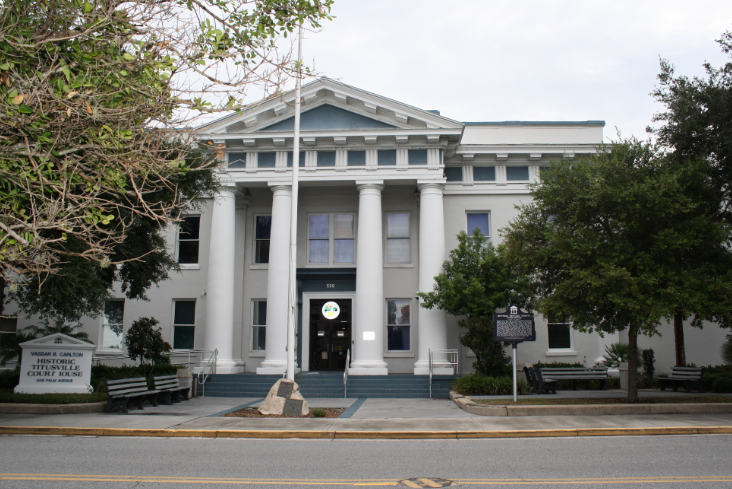
Brevard County’s main courthouse is the Harry T. & Harriette V. Moore Justice Center in Viera, with branch courthouses in Titusville (historic) and Melbourne. These court facilities host different divisions — from criminal and civil to family — making it easier to find exactly where to go for your court appointment.
Key Courthouse Locations in Brevard County
Here’s a breakdown of the major Brevard County courthouse buildings, their addresses, and which court divisions are based at each:
| Courthouse | Address | Court Divisions / Facilities Located Here |
|---|---|---|
| Moore Justice Center (Viera, Main Courthouse) | 2825 Judge Fran Jamieson Way, Viera, FL 32940 Brevard County Sheriff’s Office+2flcourts18.org+2 | County Court (civil, criminal), Circuit Court (civil, criminal, juvenile), Family Court, Probate, Problem‑Solving Courts (e.g., Adult Drug Court) brevardbar.org+1 |
| Vassar B. Carlton Historic Titusville Courthouse | 506 South Palm Avenue, Titusville, FL 32796 Brevard County Sheriff’s Office+1 | Some Circuit and County court functions, particularly for North Brevard. Brevard County Court+1 |
| Melbourne Branch Courthouse | 51 South Nieman Avenue, Melbourne, FL 32901 Brevard County Sheriff’s Office+1 | Family law matters, juvenile delinquency court, and other county court services. brevardbar.org |
Court Building Security & Facility Layout
- The Brevard County Sheriff’s Office Court Security Unit is responsible for security and law enforcement at all these courthouses. Deputies patrol courtroom areas, public entrances, and parking lots to ensure safety and order. Brevard County Sheriff’s Office
- In the Moore Justice Center, courtrooms are equipped with modern facilities, including large wall-mounted TVs (86″ or more) for audio/video presentations. To use devices like document cameras, users may need to make a reservation. flcourts18.org
- Given the courthouse layout, visitors should allow extra time for security screening when entering — especially for high-volume court days.
Practical Tips for Court Visitors
- Check your paperwork carefully: Your summons or court notice should tell you which courthouse you need to go to, depending on whether your case is civil, criminal, family, or juvenile.
- Use the correct entrance: These courthouse buildings may have multiple public entrances; refer to signs or ask security staff to you.
- Parking: Each courthouse has designated parking, but spaces can fill up, so arrive early.
- Public transport & maps: Use Google Maps (or another map service) and input the courthouse address to find directions and public transport options.
- Contact before visiting: If unsure of the court division or courtroom, call the court administration line: (321) 633‑2171 for Moore Justice Center.
FAQs About Brevard County Court
This section offers simple answers to common Brevard County Court questions. Each topic gives clear steps and helpful details.
How do I get a copy of my court record?
A person can request a copy of a court record by contacting the Brevard County Clerk of Court. Most records are available through the online search system, and others may require an in-person or mailed request. The clerk usually asks for basic case details so the file can be located. Fees may apply, and some older files may take extra time to prepare. This process supports public record access while still protecting sensitive material.
Are court records public?
Many court records in Brevard County are open to the public, including civil, traffic, probate, and criminal files. Some cases, such as those involving minors or protected information, remain restricted. Anyone interested can request these records through the clerk, who manages the database and shields confidential details as required. This approach helps residents stay informed while keeping privacy rules in place.
How to find my court date or docket?
Court dates and docket updates are posted through the clerk’s online search system and can also be confirmed by contacting the office directly. The information includes hearing times, case numbers, and courtroom locations. People who check their docket regularly stay aware of upcoming requirements and reduce the chance of missing a hearing. This is helpful for both attorneys and self-represented parties.
What if I cannot afford a lawyer?
A person who cannot pay for legal help may qualify for a court-appointed attorney in criminal cases. In civil matters, support may be available through local legal aid groups that assist lower-income residents. These services aim to provide fair help, clear instructions, and guidance on important forms. This gives many people a chance to participate in their case with better clarity and confidence.
Can I represent myself?
A person may choose to proceed pro se, which means handling the case without a lawyer. This option requires attention to filing rules, deadlines, and courtroom expectations. Many people use the self-help resources offered by the court to complete forms and better understand the process they must follow. With careful preparation, self-representation can be a workable choice for straightforward matters.